
1654 (correspondence) / Europe
Pascal and Fermat exchange ways to calculate chance
An interrupted game led Pascal and Fermat to compare possible outcomes and calculate a fair division of the stakes.
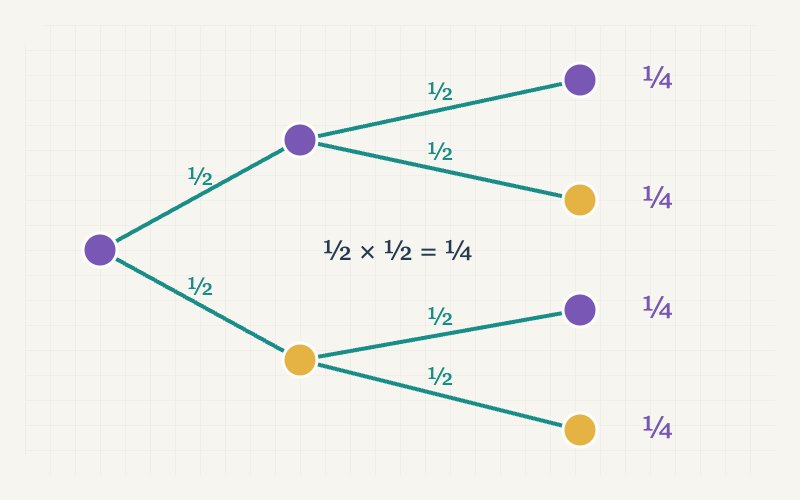
Image unavailable. The caption and source are still available.
The story
Their correspondence addressed the problem of points: how should players divide a stake when a game stops early? Fermat enumerated equally likely continuations, while Pascal also used recursive reasoning. Earlier writers, including Pacioli and Cardano, had studied games of chance. These letters neither invented all probability at once nor supplied its modern axiomatic foundation; Huygens and others continued the work.
Connections and context
Calculating uncertain outcomes would later support statistics, insurance and information theory, through many further developments.
Dates and precision
1654 (correspondence) Documented date
Positioned by the documented year, month or day. Missing precision is not inferred.
Representative map location
Paris
Paris represents Pascal’s end of a correspondence with Fermat in Toulouse, not a single research site.
Representative coordinates · 48.8566°, 2.3522°
A marker identifies one representative place, such as a manuscript collection, laboratory or observing site. It does not mean the work happened only there, or assign a shared discovery to one country.
Bibliography
- American Physical Society: Pascal’s letters to Fermat on the problem of points
References are listed as plain bibliography titles. They support particular facts or context; a reference does not certify every interpretation in a story.