Augustus
From civil war to the Roman principate
Public life
On this page
Life overview
Born Gaius Octavius, Augustus rose through adoption, alliances and civil war. His rule retained republican institutions while concentrating military power and public authority in one person.
Places and turning points
Dashed lines show the order of selected places, not an exact travel route.
63 BCE
A life before the imperial title
Rome City-level representative point
The future Augustus was born Gaius Octavius in 63 BCE, before Rome had an emperor. His later names reflected adoption, military status and political honours. Beginning with his original name helps distinguish the young aristocrat from the imperial identity projected by monuments produced much later.
City-level marker; no individual building is asserted.
Representative coordinates · 41.9028°, 12.4964°
44 BCE
Caesar’s heir enters the struggle
Rome City-level representative point
Julius Caesar’s assassination brought his young adopted heir into a struggle for authority. Octavian used Caesar’s name and inheritance to attract support, at times cooperating with Mark Antony. Their later conflict was not inevitable at this moment; shifting alliances and armed force shaped the path to sole rule.
City-level marker; no individual building is asserted.
Representative coordinates · 41.9028°, 12.4964°
31 BCE
A naval victory in a civil war
Actium region Representative area
Octavian’s forces defeated the fleet of Antony and Cleopatra near Actium. Agrippa played a major operational role in the campaign. Victory strengthened Octavian’s position, but Egypt was annexed only in the following year. Commemorative coins later presented the battle as proof of his authority and military success.
Regional reference point, not a verified camp or exact route.
Representative coordinates · 38.954°, 20.744°
27 BCE
Republican forms, concentrated power
Rome City-level representative point
The Senate conferred the title Augustus as Octavian presented a restoration of republican government. Traditional offices continued, but control of armies and provinces gave him exceptional power. The principate emerged through successive arrangements rather than a single modern-style constitution, and his own account carefully framed this concentration as public service.
City-level marker; no individual building is asserted.
Representative coordinates · 41.9028°, 12.4964°
14 CE
Death, succession and the official account
Rome City-level representative point
Augustus died in 14 CE and Tiberius succeeded him. Rome preserved his public memory through monuments, honours and the account known as the Res Gestae. This stage uses Rome for the political aftermath, not as his deathplace: his carefully selected list of achievements is evidence of imperial self-presentation, not a neutral balance sheet.
Rome marks succession and commemoration, not Augustus’s deathplace.
Representative coordinates · 41.9028°, 12.4964°
Legacy and context
The principate provided a durable imperial framework, supported by armies, taxation and dynastic succession. Official images of peace and restoration must be read alongside conquest, repression and unequal power.
Bibliography
- British Museum: Augustus (Octavian)
- University of Warwick: Coins of Augustus
- The Met: The Julio-Claudian Dynasty
References support specific dates and context. Bibliographies are displayed as text.
Image and source
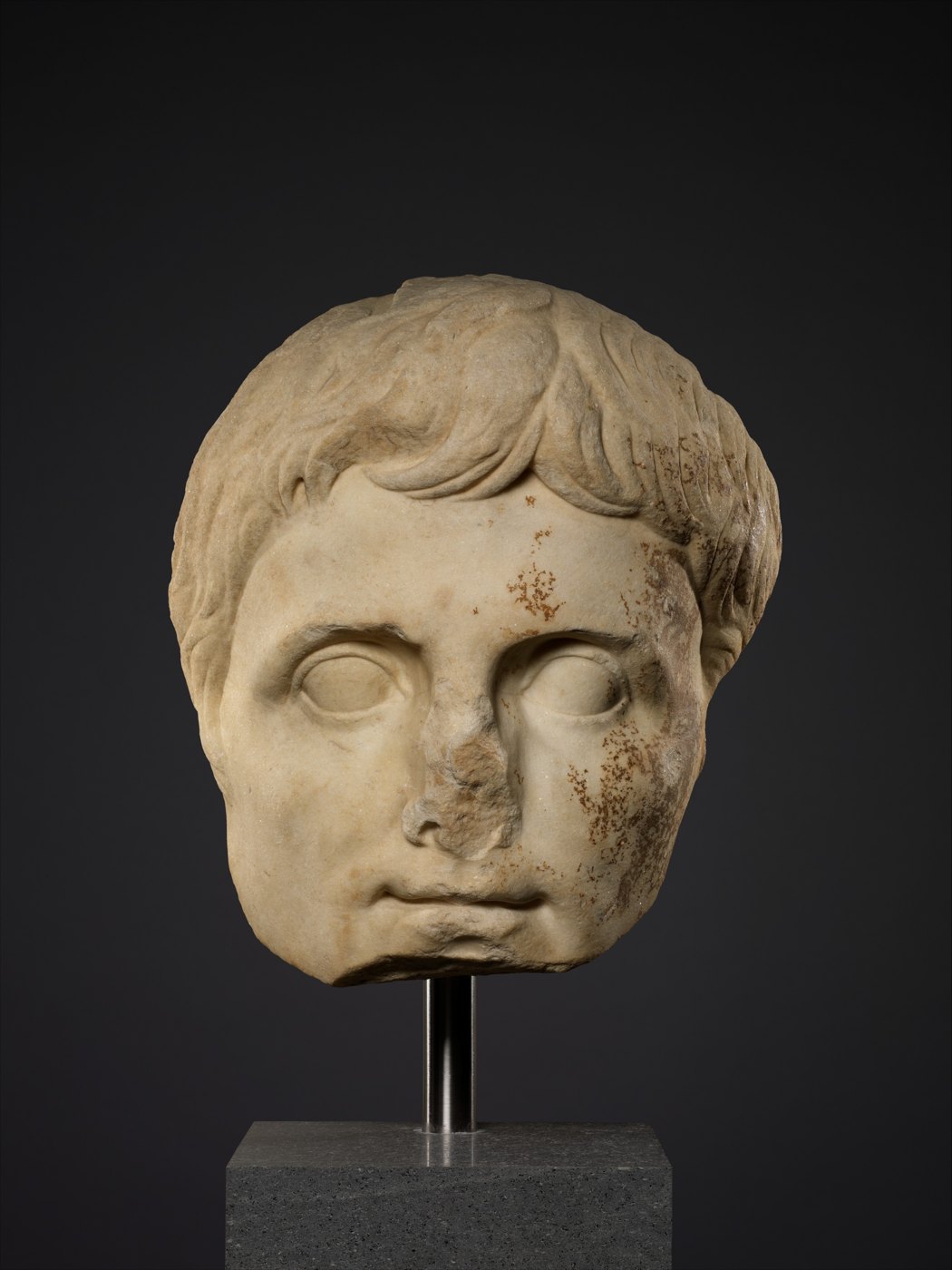
Portrait head of Augustus
Roman marble portrait of Augustus, c. 14–30 CE. This idealized imperial image was made after the establishment of the principate in 27 BCE.
- Creator
- Roman
- Collection / image provider
- The Metropolitan Museum of Art
- Source and reuse
- Source record · CC0 1.0 Universal
The source makes this image available under CC0 1.0. Consult the dedication and item-specific record below; CivAtlas adds no further restrictions.
CC0 1.0 public-domain dedication, as stated in the source record. Source credit: Roman. Reuse terms: CC0 1.0 Universal.