
1900 (black-body radiation research) / Europe
Planck introduces energy elements into black-body theory
To explain the distribution of black-body radiation, Planck used finite energy elements proportional to frequency in a statistical derivation.
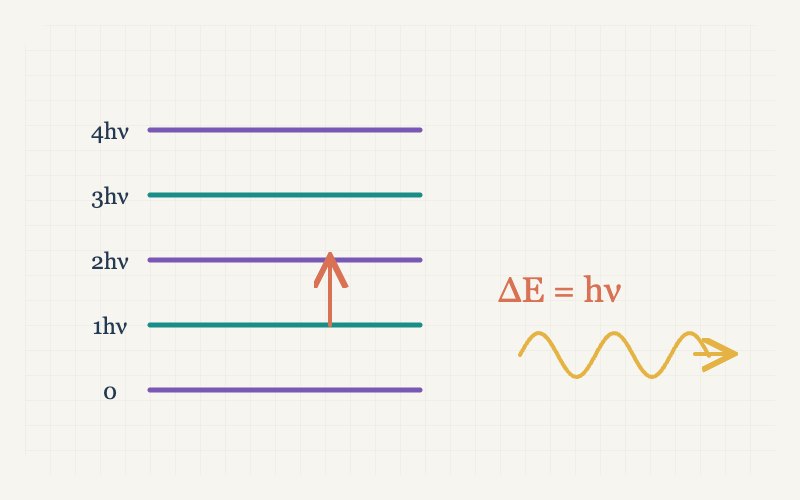
Image unavailable. The caption and source are still available.
The story
After proposing a radiation formula matching experiments, Planck presented a statistical derivation with energy elements in December 1900, introducing the constant later called h. The step concerned black-body and resonator models; it did not mean he had already accepted the later full light-quantum interpretation. Einstein’s light-quanta work and quantum mechanics of the 1920s were further developments, not completed results of 1900.
Connections and context
A radiation problem opened a route to quantum ideas, whose mathematical form and physical interpretation continued to change through experiments and debate.
Dates and precision
1900 (black-body radiation research) Documented date
Positioned by the documented year, month or day. Missing precision is not inferred.
Representative map location
Berlin
Berlin represents Planck’s university and physical-society setting; several experimental researchers supplied essential radiation measurements.
Representative coordinates · 52.52°, 13.405°
A marker identifies one representative place, such as a manuscript collection, laboratory or observing site. It does not mean the work happened only there, or assign a shared discovery to one country.
Bibliography
- German Physical Society: Planck’s December 1900 presentation
- Max Planck Institute for the History of Science teaching notes: Planck and black-body radiation
References are listed as plain bibliography titles. They support particular facts or context; a reference does not certify every interpretation in a story.