
1898 (polonium and radium reports) / Europe
Radioactivity leads the Curies to new elements
Marie and Pierre Curie used radioactivity measurements to investigate unknown components of ores. Their radium report also included collaborator Gustave Bémont.
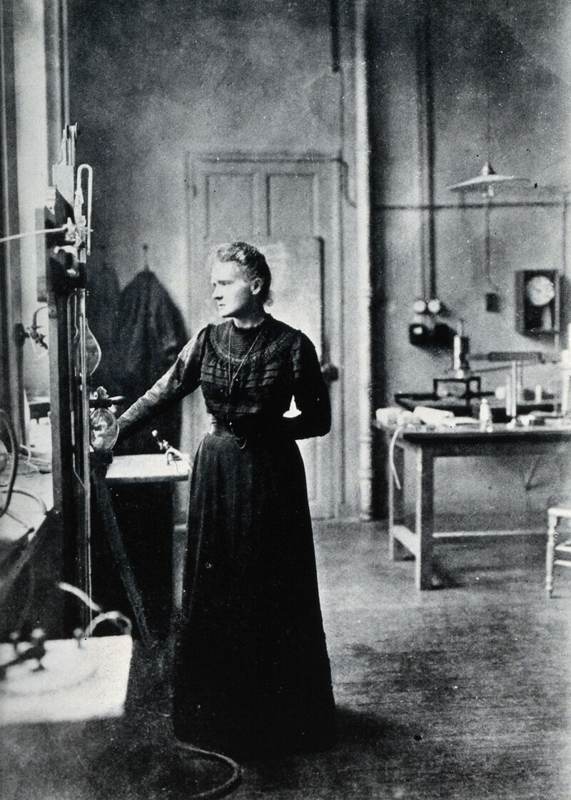
Image unavailable. The caption and source are still available.
The story
Following Becquerel’s discovery of uranium rays, Marie Curie applied quantitative radiation measurements to minerals. The Curies reported polonium in 1898, then radium with Gustave Bémont. Reporting an element, purifying compounds and obtaining a pure metal were separate achievements requiring further work. Instruments and chemical processing supported the research; its radiation hazards were understood only gradually.
Connections and context
Radioactivity challenged ideas of immutable atoms and connected chemistry with nuclear physics and medicine. Discovery and safe use nevertheless required different kinds of knowledge.
Dates and precision
1898 (polonium and radium reports) Documented date
Positioned by the documented year, month or day. Missing precision is not inferred.
Representative map location
Paris
The marker represents research in Paris; ore supply and subsequent separation involved wider networks.
Representative coordinates · 48.843°, 2.347°
A marker identifies one representative place, such as a manuscript collection, laboratory or observing site. It does not mean the work happened only there, or assign a shared discovery to one country.
Bibliography
- Nobel Prize and Musée Curie: polonium and radium
- Curie Foundation chronology (Musée Curie)
References are listed as plain bibliography titles. They support particular facts or context; a reference does not certify every interpretation in a story.