Tokugawa Ieyasu
From a Mikawa castle family to government in Edo
Public life
On this page
Life overview
Tokugawa Ieyasu established the shogunate based in Edo after a career of warfare and alliances. These five stages connect Okazaki, his move to the Kanto region, Sekigahara, the founding of the government and his later residence at Sunpu. The map shows selected places, not the extent of his rule.
Places and turning points
Dashed lines show the order of selected places, not an exact travel route.
1543; old calendar: Tenbun 11, month 12, day 26
Born into the Matsudaira family
Okazaki, Mikawa (present-day Aichi), Japan City-level representative point
The future Ieyasu was born at Okazaki Castle as Matsudaira Takechiyo, son of the local lord Hirotada. His recorded birthday falls late in Tenbun 11, conventionally labeled 1542 in Japanese chronologies, but in the western year 1543. This entry preserves both forms rather than treating them as different births.
City-level reference; the marker does not identify a particular room or building.
Representative coordinates · 34.954°, 137.174°
1590
A new base in Edo
Edo (present-day Tokyo), Japan City-level representative point
After Toyotomi Hideyoshi’s defeat of the Odawara Hojo, Ieyasu received territories in the Kanto region and made Edo Castle his base. The move changed his political geography from central Japan toward the eastern plain. Edo was not yet the seat of an established Tokugawa shogunate; that followed in 1603.
City-level reference; the marker does not identify a particular room or building.
Representative coordinates · 35.6762°, 139.6503°
1600
The coalition victory at Sekigahara
Sekigahara area, present-day Gifu, Japan Representative area
After Hideyoshi’s death, rival groups struggled over the government left to his young heir. Ieyasu’s eastern coalition defeated the opposing coalition at Sekigahara. The victory strengthened his position among the regional lords, but the Toyotomi family remained in Osaka. It was a major turning point, not an immediate end to all conflict.
Regional reference for the battlefield landscape; no exact troop positions or marching routes are asserted.
Representative coordinates · 35.365°, 136.466°
1603
A shogunate centered on Edo
Edo (present-day Tokyo), Japan City-level representative point
Ieyasu received the imperial appointment of sei-i taishogun in 1603 and established his government in Edo. The map marks the government’s base, not the location of an investiture ceremony. He passed the office to his son Hidetada in 1605, helping make shogunal succession hereditary within the Tokugawa house.
City-level marker for the Edo government; not a marker for the imperial appointment ceremony.
Representative coordinates · 35.6762°, 139.6503°
1607–1616
Retired shogun at Sunpu
Sunpu (present-day Shizuoka), Japan City-level representative point
Two years after transferring the shogunal office to Hidetada, Ieyasu moved to Sunpu as the retired shogun, or ogosho. The castle was enlarged with labor and materials mobilized from regional lords. His retirement did not simply remove him from politics. He died at Sunpu Castle in 1616; later shrine worship belongs to his posthumous history.
City-level reference; the marker does not identify a particular room or building.
Representative coordinates · 34.9756°, 138.3828°
Legacy and context
His successors developed a hereditary shogunate in cooperation and tension with regional lords and the imperial court. The institutions took shape over generations; neither the whole Edo order nor every later restriction can be attributed to Ieyasu alone. His posthumous worship also shaped how later generations represented him.
Bibliography
- Shizuoka City: Sumpu Castle (English section)
- Japan Tourism Agency: Matsudaira Toshogu (English section)
- Letters from Japan’s Sixteenth and Seventeenth Centuries: calendar note, p. vi (English)
- National Archives of Japan: Ieyasu’s birth (Japanese)
- National Archives of Japan: Sekigahara (Japanese)
References support specific dates and context. Bibliographies are displayed as text.
Image and source
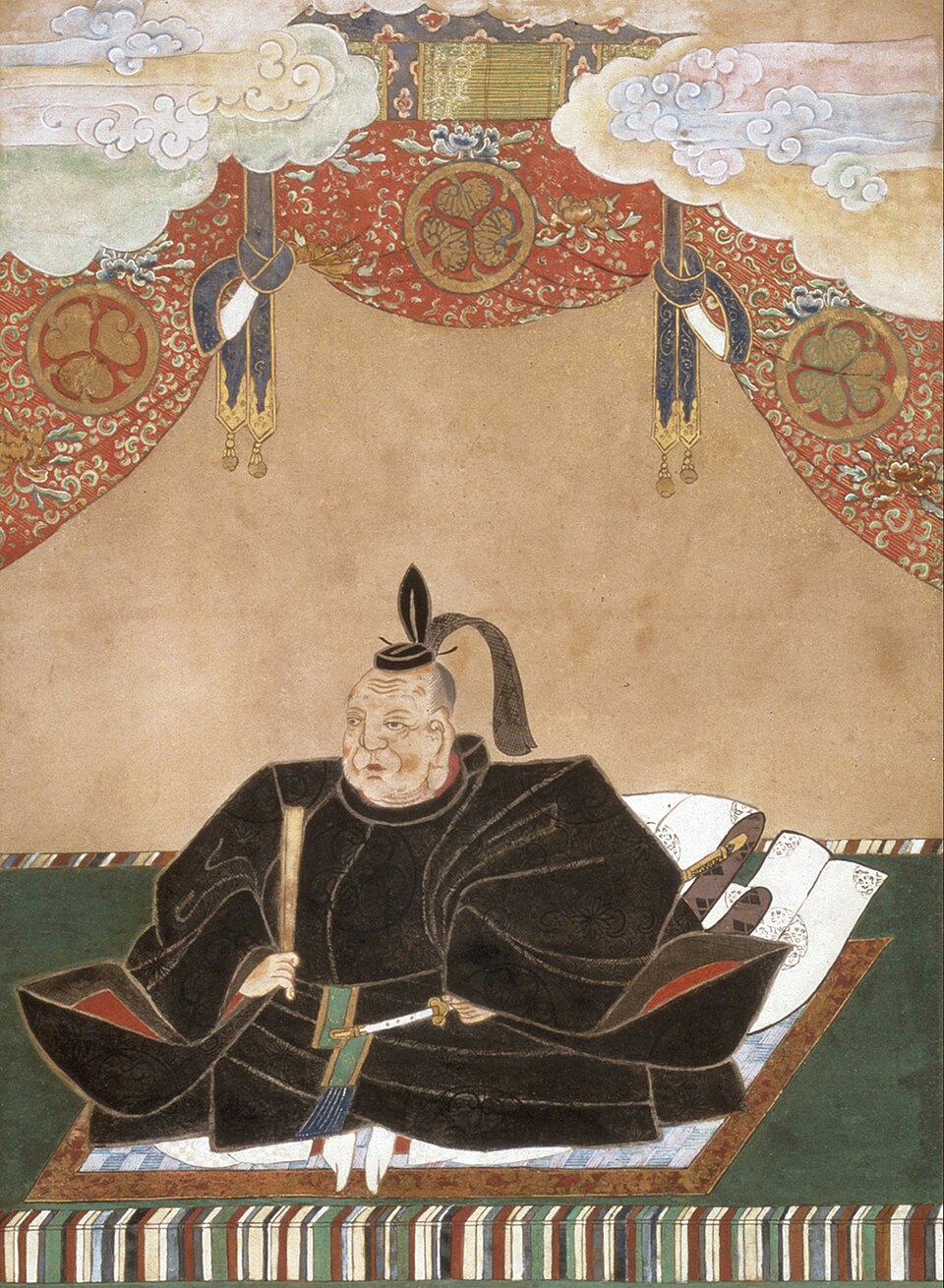
Tokugawa Ieyasu as Tosho Daigongen,17th century
A 17th-century painted image of the deified Ieyasu, traditionally attributed to Kano Tan’yu, in the Tokugawa Art Museum. This posthumous religious representation is not a photograph or a documented sitting from life.
- Creator
- Traditionally attributed to Kano Tan’yu (1602–1674)
- Collection / image provider
- The Tokugawa Art Museum · Wikimedia Commons
- Source and reuse
- Source record · Public Domain Mark 1.0
The source identifies this image as public domain. Consult its item-specific rights record and terms below; CivAtlas does not claim new copyright or grant additional rights in this image.
Public domain, as identified in the source record. Source credit: Traditionally attributed to Kano Tan’yu (1602–1674). Reuse terms: Public Domain Mark 1.0.