
21 June 1948 (first program run) / Europe
Manchester’s Baby runs a program held in electronic memory
Williams, Kilburn and Tootill’s experimental machine fetched instructions from electronic memory, demonstrating that stored-program computing could work in hardware.
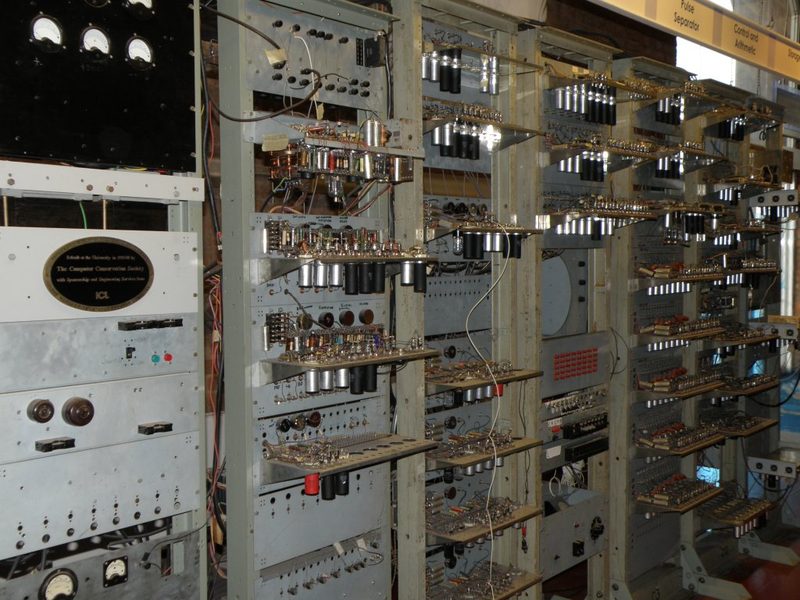
Image unavailable. The caption and source are still available.
The story
Manchester’s Small-Scale Experimental Machine, nicknamed Baby, was built to test the Williams–Kilburn cathode-ray-tube store. On 21 June 1948 it ran a program written by Kilburn, providing a landmark demonstration of electronic stored-program operation. This specific achievement does not make it the first computer under every definition. More practical machines, including the Manchester Mark 1, followed, while stored-program ideas drew on a wider research community.
Connections and context
Turing examined what can be computed; stored-program hardware showed how instructions could themselves be saved and changed as data. Architecture, electronics and software increasingly developed together.
Dates and precision
21 June 1948 (first program run) Documented date
Positioned by the documented year, month or day. Missing precision is not inferred.
Representative map location
University of Manchester
The marker represents the university research setting where Baby was built and ran its first program.
Representative coordinates · 53.466°, -2.234°
A marker identifies one representative place, such as a manuscript collection, laboratory or observing site. It does not mean the work happened only there, or assign a shared discovery to one country.
Bibliography
- University of Manchester: University celebrates Baby’s 65th birthday
- University of Manchester: Oh Baby! First photograph of early modern computer
References are listed as plain bibliography titles. They support particular facts or context; a reference does not certify every interpretation in a story.