
1957 (compiler delivered to users) / Americas
FORTRAN translates mathematical expressions into efficient machine code
An IBM team led by Backus delivered a compiler that translated a formula-oriented programming language into machine instructions for the IBM 704.
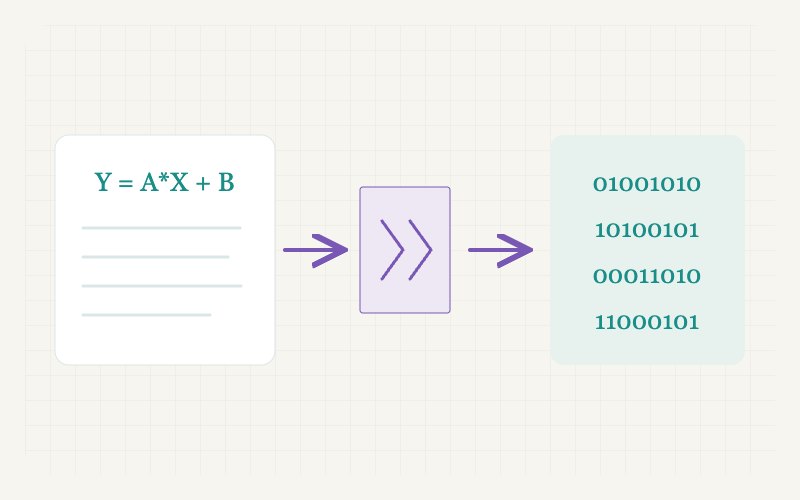
Image unavailable. The caption and source are still available.
The story
After several years of development, FORTRAN reached IBM 704 users in 1957. Its team designed both a language and a compiler capable of producing efficient executable code, reducing dependence on hand-written machine instructions. This milestone concerns a usable system and its distribution, not the sole beginning of high-level languages or compilation. Standardization and implementations for other machines required further collective work.
Connections and context
Stored-program machines made instructions writable; higher-level languages changed how people expressed computational tasks. Compilers connected mathematical models and scientific calculations to electronic hardware.
Dates and precision
1957 (compiler delivered to users) Documented date
Positioned by the documented year, month or day. Missing precision is not inferred.
Representative map location
New York (IBM programming research)
New York represents the early IBM programming research setting; development and user trials extended to other locations.
Representative coordinates · 40.758°, -73.978°
A marker identifies one representative place, such as a manuscript collection, laboratory or observing site. It does not mean the work happened only there, or assign a shared discovery to one country.
Bibliography
- IBM: Fortran
- Computer History Museum: History of FORTRAN and FORTRAN II
References are listed as plain bibliography titles. They support particular facts or context; a reference does not certify every interpretation in a story.