
1446 CE / East Asia
Hunminjeongum and the Korean Writing System
Sejong of the Joseon dynasty published Hunminjeongum, responding to difficulties in writing with a new script suited to the local language and broadening the possibilities for spreading knowledge.
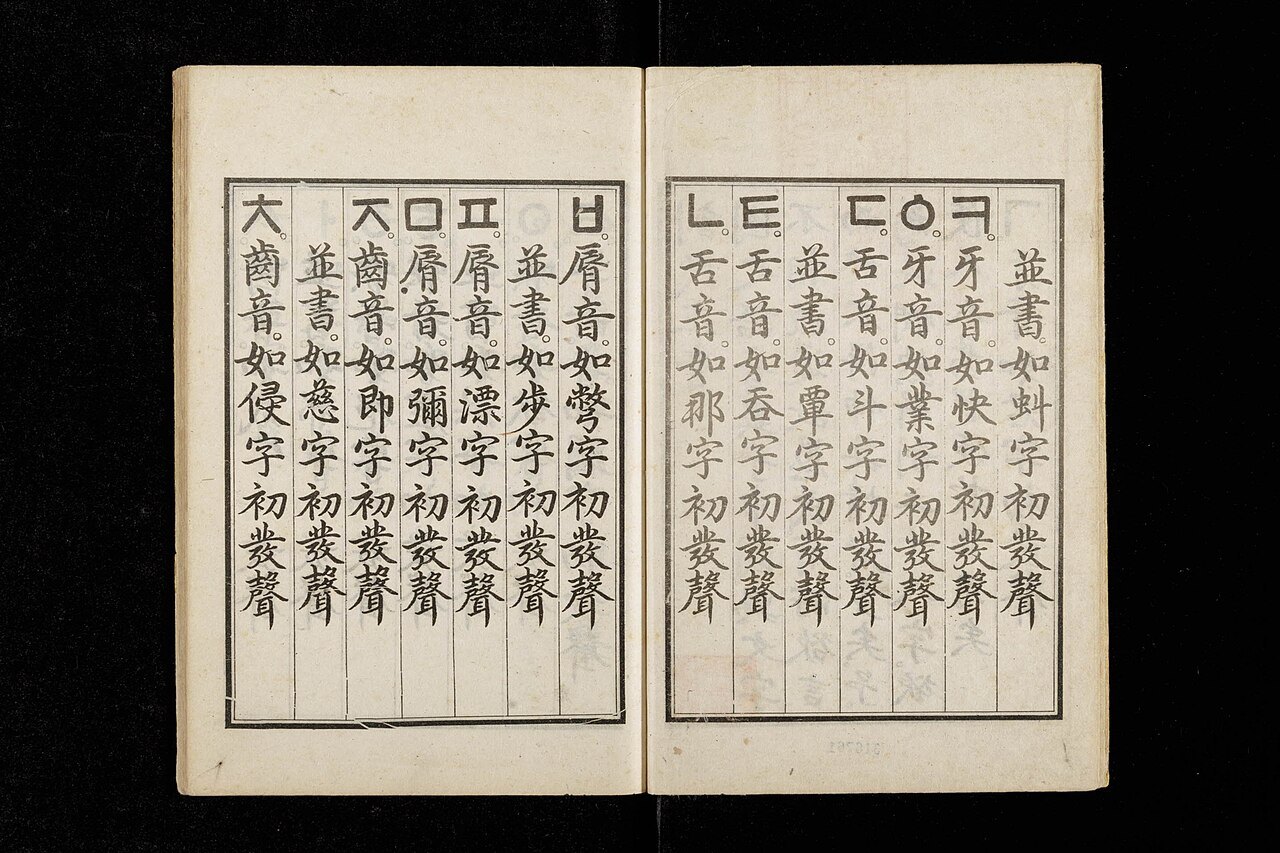
Image unavailable. The caption and source are still available.
The story
After the Joseon dynasty was founded in 1392, state administration and elite scholarship long used literary Chinese. Sejong supported the creation of a script suited to Korean pronunciation, completed in 1443 and published as Hunminjeongum in 1446. The surviving explanatory edition also preserves scholars' explanations of the structure and use of the letters. The new script lowered barriers to recording and reading in the local language, but did not immediately replace literary Chinese and faced opposition from some elites. It gradually spread through literature, education, and social movements, becoming an important foundation of today's Hangul; its widespread adoption took several centuries.
Elsewhere in the world
Korea already had experience with metal movable type. The publication of the new script and the spread of European printing occurred in the same century, as different regions changed the conditions for transmitting knowledge in different ways.
Dates and precision
1446 CE Documented date
Positioned by the documented year, month or day; missing months and days are not inferred.
Representative map location
Representative coordinates · 37.58°, 126.977°
Coordinates locate a representative point for the story. They do not mean the event happened only here and do not represent historical borders.
Bibliography
- UNESCO | Hunminjeongum Manuscript
- UNESCO | Jikji and Earlier Metal Movable Type
Sources are listed as bibliography titles, without external links. A reference does not mean every sentence or interpretation has been independently verified.