
1820 (experiments and report) / Europe
Ørsted finds that a current deflects a compass
A compass needle near a conducting wire revealed an experimentally testable connection between electric current and magnetism.
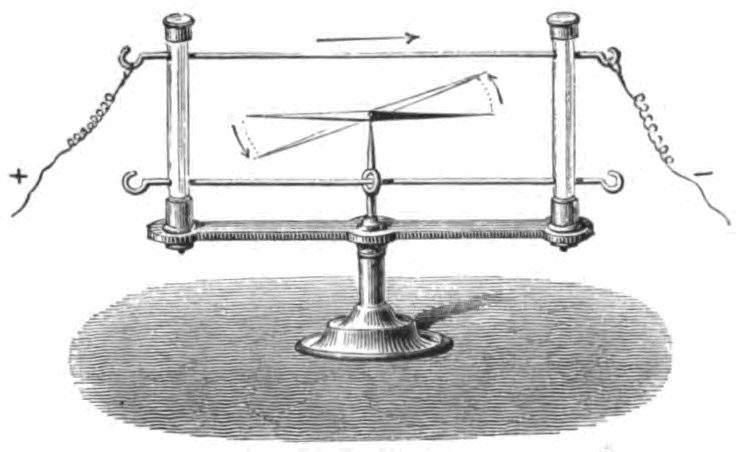
Image unavailable. The caption and source are still available.
The story
Ørsted observed the needle’s response in Copenhagen and published a report in July 1820 after further investigation. This was not electromagnetic induction, the later study of currents produced by changing magnetic conditions. His findings prompted research by Ampère and others, who measured electrical and magnetic interactions. A lecture demonstration did not already contain the complete electromagnetic theory.
Connections and context
Volta’s pile supplied current and the compass made its effect visible; Faraday later investigated the complementary problem of induction.
Dates and precision
1820 (experiments and report) Documented date
Positioned by the documented year, month or day. Missing precision is not inferred.
Representative map location
Copenhagen
The marker identifies Ørsted’s experimental and teaching setting; subsequent investigations also took place elsewhere.
Representative coordinates · 55.6761°, 12.5683°
A marker identifies one representative place, such as a manuscript collection, laboratory or observing site. It does not mean the work happened only there, or assign a shared discovery to one country.
Bibliography
- University of Copenhagen, Niels Bohr Institute: Electromagnetism, the unique discovery
- Technical University of Denmark: H. C. Ørsted and the discovery of electromagnetism
References are listed as plain bibliography titles. They support particular facts or context; a reference does not certify every interpretation in a story.