
18 March–28 May 1871 / Europe
The Paris Commune: self-government and civil war
After war and siege, an uprising in Paris produced an elected communal government with democratic and social ambitions. Its brief rule ended in the violent repression of Bloody Week.
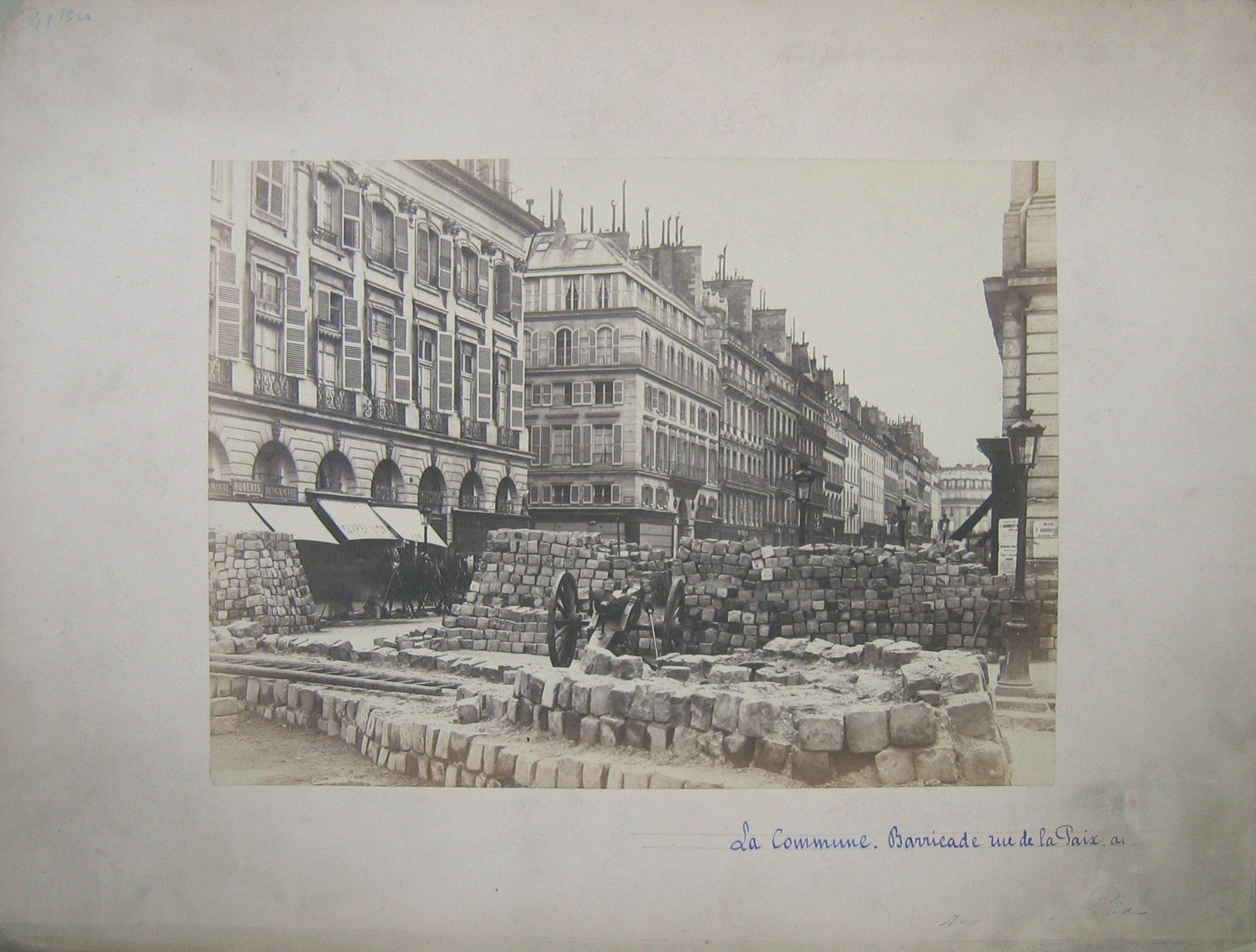
Image unavailable. The caption and source are still available.
The story
France’s defeat in the Franco-Prussian War and the siege of Paris left hunger, hardship and deep political distrust. On 18 March 1871, a government attempt to seize National Guard cannon helped trigger an uprising. The government withdrew to Versailles. Elections followed on 26 March, and the Commune was proclaimed on 28 March: the uprising and the formal proclamation were separate events.
The elected council sought greater popular control of public affairs and measures to improve workers’ lives. Its initiatives included limits on officials’ pay; other decrees addressed rent arrears and secular education. Wartime conditions constrained implementation. Communards disagreed over authority and revolutionary strategy, and support did not extend to all Parisians. Women participated through clubs, organising and relief work, despite exclusion from the electoral franchise.
Versailles troops retook the city during Bloody Week, 21–28 May. Fighting, executions and mass arrests were followed by imprisonment and deportation; Communards also killed hostages. Estimates of the dead remain disputed. Marxist traditions interpreted the Commune as an experiment in workers’ government, while other accounts emphasise republican municipal autonomy or civil war. These interpretations should be distinguished from the documented chronology, policies and violence.
Elsewhere in the world
Read alongside the divisions of 1848: who should govern, what social responsibilities should a republic have, and how should local and national authority relate? The Commune later became a reference point for international labour and socialist movements.
Dates and precision
18 March–28 May 1871 Ongoing process
The dates describe a process over time; the interactive timeline uses its starting point.
Representative map location
Paris · Commune of 1871
The point locates Paris. It represents a city-wide episode with events in several neighbourhoods, not a territorial boundary or a claim that every resident supported the Commune.
Representative coordinates · 48.8566°, 2.3522°
Coordinates locate a representative point for the story. They do not mean the event happened only here and do not represent historical borders.
Bibliography
- Assemblée nationale | La Commune de Paris
- Ville de Paris | Les 150 ans de la Commune : l’origine (1/5)
- Ville de Paris | Les racines de réformes audacieuses (4/5)
- Ville de Paris | La fin sanglante et les conséquences (5/5)
Sources are listed as bibliography titles, without external links. A reference does not mean every sentence or interpretation has been independently verified.