
1776 CE / Americas
The Thirteen North American Colonies Declare Independence
The Continental Congress adopted the Declaration of Independence, arguing for independence through natural rights and the consent of the governed; the war continued afterward.
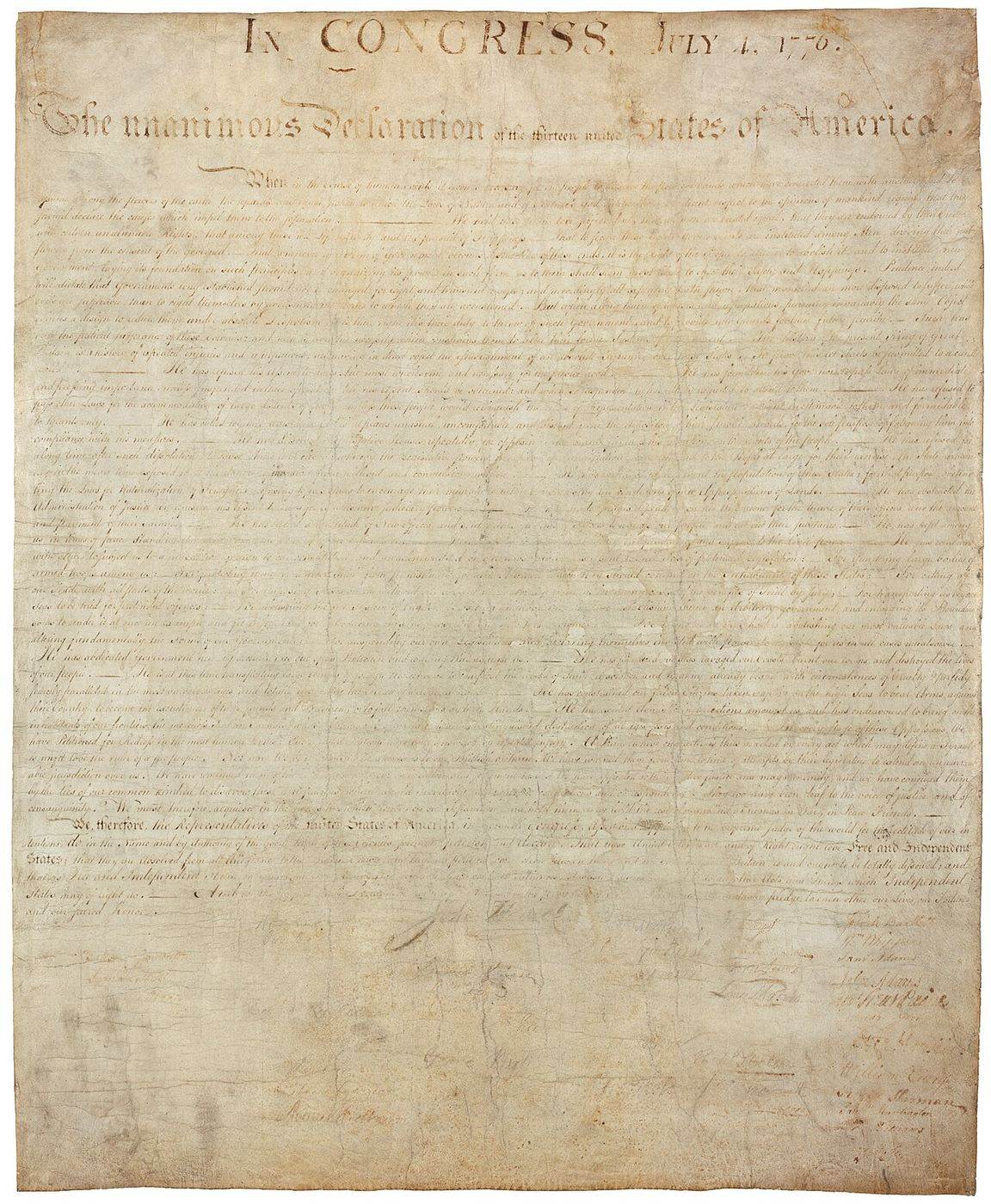
Image unavailable. The caption and source are still available.
The story
On July 4, 1776, the Continental Congress adopted the Declaration of Independence, announcing the separation of the thirteen colonies from Britain. The text provided influential language for anticolonial and rights claims, but independence still had to be achieved through war. The principle of equality was not universally implemented: slavery continued, and women and many Indigenous people were also excluded from political rights. These contradictions became central to continuing debates in later social movements.
Elsewhere in the world
French military and financial assistance contributed to the North American War of Independence, and revolutionary ideas subsequently continued to move across both sides of the Atlantic.
Dates and precision
1776 CE Documented date
Positioned by the documented year, month or day; missing months and days are not inferred.
Representative map location
Representative coordinates · 39.948°, -75.15°
Coordinates locate a representative point for the story. They do not mean the event happened only here and do not represent historical borders.
Bibliography
- U.S. National Archives | The Declaration of Independence: A History
Sources are listed as bibliography titles, without external links. A reference does not mean every sentence or interpretation has been independently verified.