
c. 1st century CE onward (early surviving remains) / Sub-Saharan Africa
Aksum: Royal Power in the African Highlands
Stelae, royal tombs and palace remains reveal a political tradition whose symbolic importance outlasted its decline.
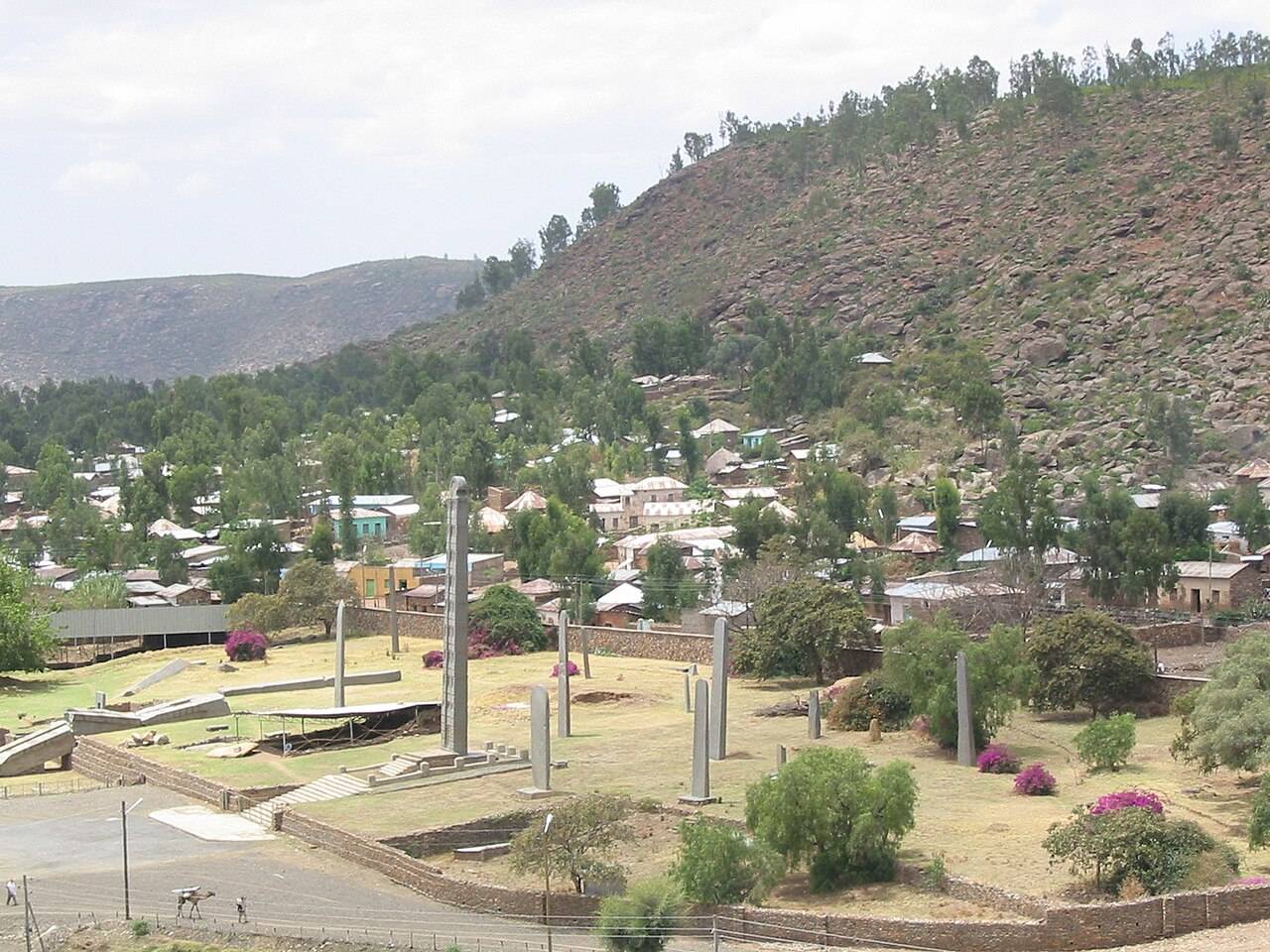
Image unavailable. The caption and source are still available.
The story
At Aksum in northern Ethiopia, monumental stelae, royal tombs and ruined palaces show how rulers organized labour and expressed authority. UNESCO dates the surviving remains broadly from the first to the thirteenth centuries CE. This entry begins with the early phase; about 100 CE is not an exact foundation date for the kingdom. After political decline in the tenth century, Ethiopian emperors continued to hold coronations here, showing how a city could retain ceremonial authority after losing political power.
Elsewhere in the world
Aksum later belonged to the wider world of Eastern Rome and Persia, placing the African highlands within ancient interregional politics.
Dates and precision
c. 1st century CE onward (early surviving remains) Approximate year
An archaeological or scholarly estimate, rather than a claim that an event occurred in one exact year.
Representative map location
Ethiopian Highlands · Aksum
The marker represents the ancient city, not the kingdom’s boundaries or a particular stele.
Representative coordinates · 14.132°, 38.72°
Coordinates locate a representative point for the story. They do not mean the event happened only here and do not represent historical borders.
Bibliography
- UNESCO World Heritage Centre | Aksum
Sources are listed as bibliography titles, without external links. A reference does not mean every sentence or interpretation has been independently verified.