
1789 (publication) / Europe
Lavoisier reorganizes chemistry
Lavoisier’s Elementary Treatise linked careful weighing, an oxygen-based account of combustion and revised chemical language in a systematic teaching framework.
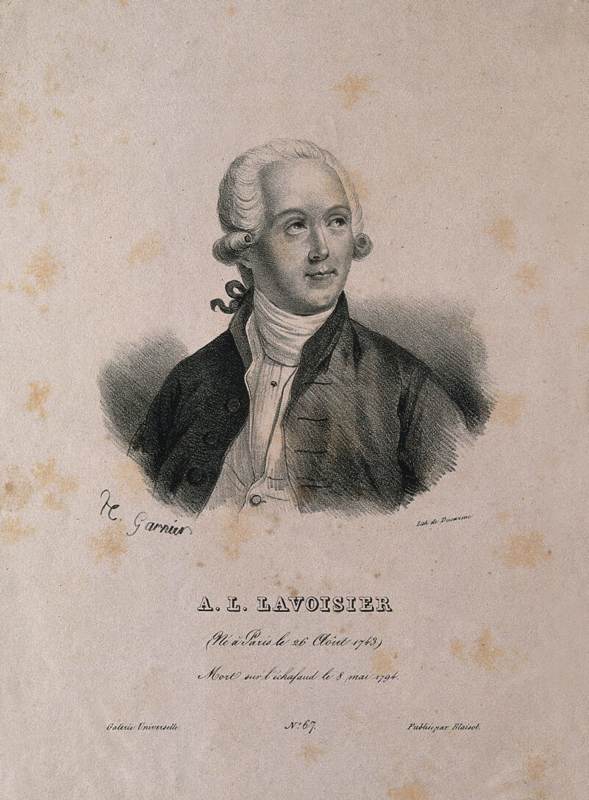
Image unavailable. The caption and source are still available.
The story
The 1789 treatise organized research on combustion, gases and substances around quantitative measurement. It drew on gas studies by Priestley, Scheele and others; Marie-Anne Lavoisier contributed translation and illustrations. Some proposed simple substances were later rejected. The book therefore marks a major reorganization, rather than the overnight completion of modern chemistry.
Connections and context
Measurement and shared terminology made chemical findings easier to compare. Atomic theory and the periodic table would later provide further ways to organize matter.
Dates and precision
1789 (publication) Documented date
Positioned by the documented year, month or day. Missing precision is not inferred.
Representative map location
Paris
The marker represents the publication city and Lavoisier’s principal research setting.
Representative coordinates · 48.8566°, 2.3522°
A marker identifies one representative place, such as a manuscript collection, laboratory or observing site. It does not mean the work happened only there, or assign a shared discovery to one country.
Bibliography
- Library of Congress: Traité élémentaire de chimie (1789)
- Traité élémentaire de chimie (Smithsonian Libraries)
References are listed as plain bibliography titles. They support particular facts or context; a reference does not certify every interpretation in a story.