
1893 CE / Oceania
Women in New Zealand Win the Parliamentary Vote
Sustained petitioning helped secure an electoral law in New Zealand, making it the first self-governing country to grant women the right to vote in parliamentary elections.
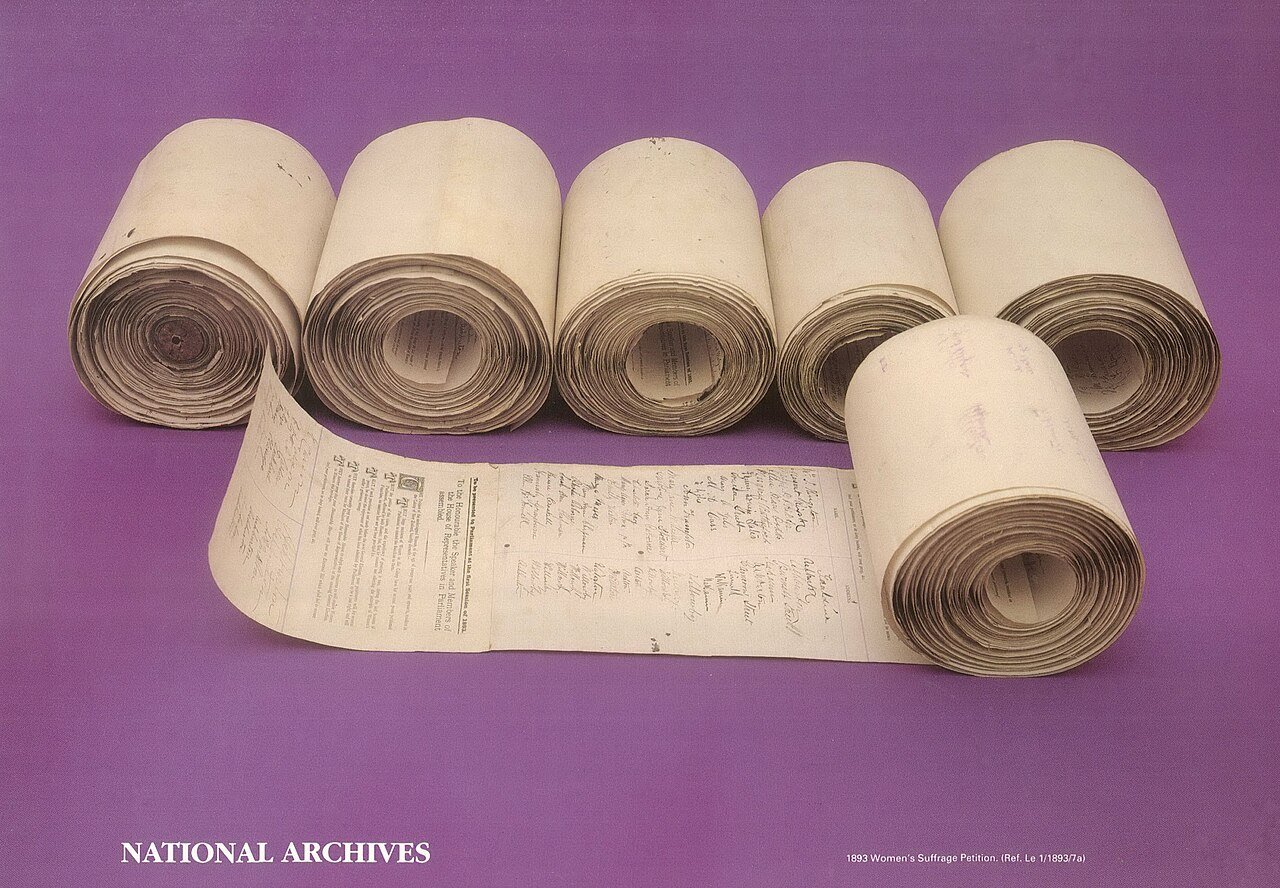
Image unavailable. The caption and source are still available.
The story
After years of organizing and large petitions, New Zealand's Electoral Act of 1893 gave women the right to vote in parliamentary elections. Activists including Kate Sheppard helped bring about this change, and Māori women also participated in discussions of rights. New Zealand became the first self-governing country to achieve this breakthrough, but voting did not immediately bring equality in all political rights: women could not stand for Parliament until 1919, and other inequalities in colonial society continued.
Elsewhere in the world
New Zealand's success encouraged women's movements in Britain, the United States, and elsewhere, while demands for voting rights spread through international organizations and publications.
Dates and precision
1893 CE Documented date
Positioned by the documented year, month or day; missing months and days are not inferred.
Representative map location
Representative coordinates · -41.278°, 174.777°
Coordinates locate a representative point for the story. They do not mean the event happened only here and do not represent historical borders.
Bibliography
- New Zealand Ministry for Culture and Heritage, NZ History | Women and the vote
Sources are listed as bibliography titles, without external links. A reference does not mean every sentence or interpretation has been independently verified.