
1687 CE / Europe
Newton’s Principia: Motion in Mathematical Form
Laws of motion and universal gravitation brought terrestrial movement and celestial orbits into a shared mathematical framework.
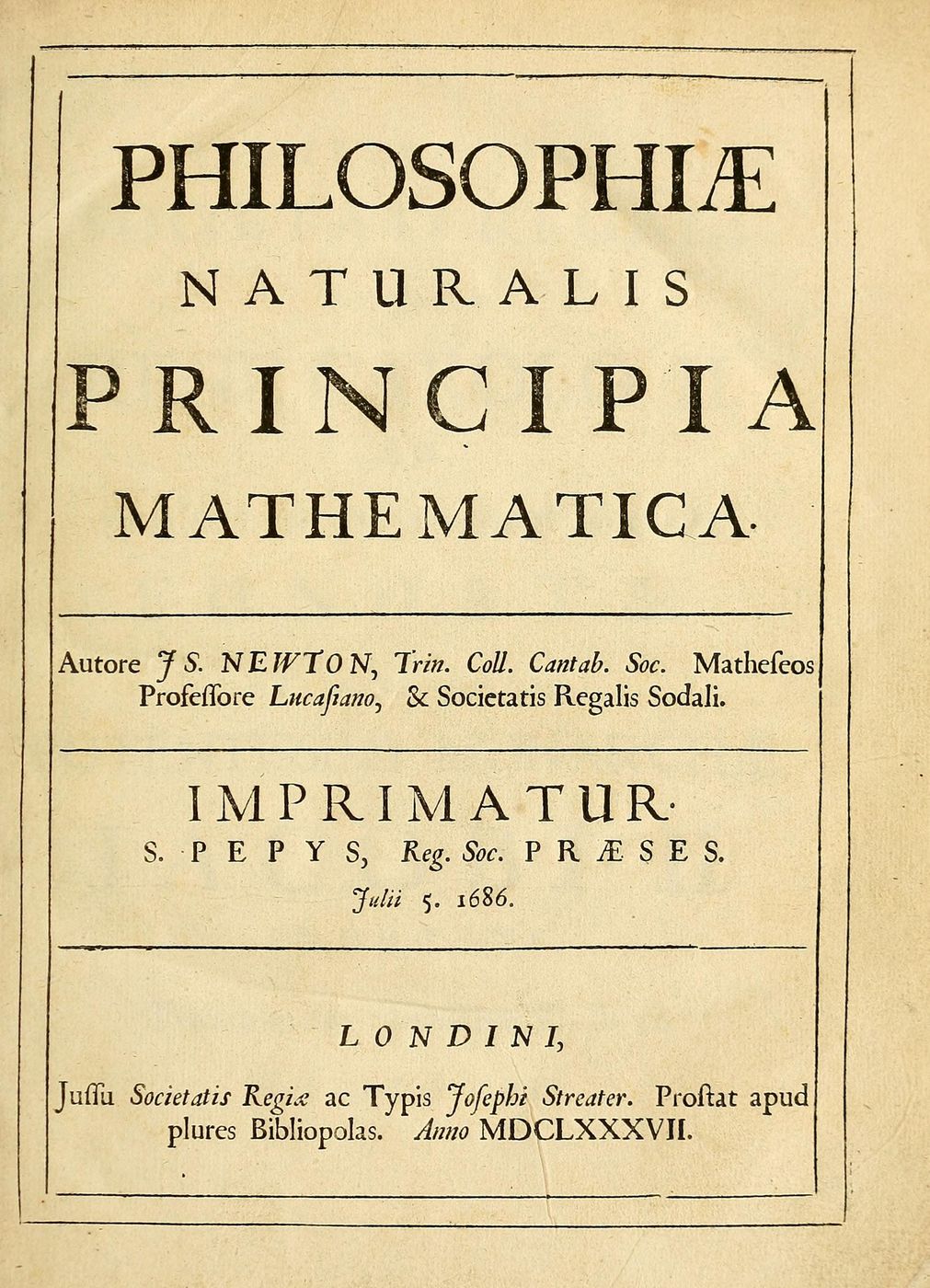
Image unavailable. The caption and source are still available.
The story
Newton’s Mathematical Principles of Natural Philosophy appeared in 1687, presenting laws of motion and universal gravitation. Mathematical relationships linked observations of terrestrial and celestial movement. The work also emerged through scholarly correspondence and publication: its manuscript, corrections and Royal Society records reveal the work of organizing and communicating knowledge. Its influence does not mean it explains phenomena at every scale; later physics continued to establish the limits within which Newtonian models apply.
Elsewhere in the world
Astronomical observation, measurement and maritime activity encouraged one another, while books and scholarly institutions carried knowledge across regions.
Dates and precision
1687 CE Documented date
Positioned by the documented year, month or day; missing months and days are not inferred.
Representative map location
London · Publication context
London represents publishing and learned-society activity, not the location of all Newton’s research.
Representative coordinates · 51.508°, -0.128°
Coordinates locate a representative point for the story. They do not mean the event happened only here and do not represent historical borders.
Bibliography
- Royal Society | Principia
Sources are listed as bibliography titles, without external links. A reference does not mean every sentence or interpretation has been independently verified.