
c. 3000–2000 BCE / Americas
Caral: Early Cities in the Andes
Monumental platforms and sunken courts grew within a coastal economy linking farming, fishing and exchange.
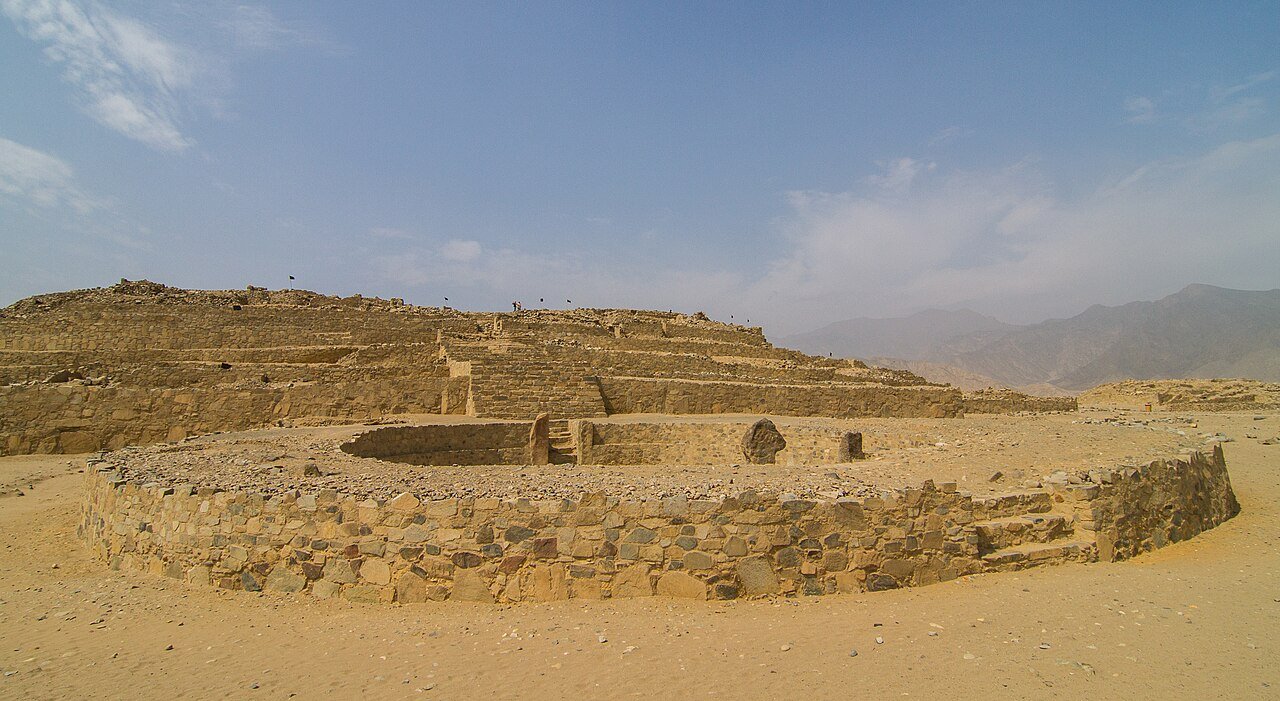
Image unavailable. The caption and source are still available.
The story
Caral in the Supe Valley preserves public buildings, residences and workshops. Archaeological evidence links inland cotton cultivation and textile production with exchanges for coastal fish and shellfish. These relationships helped sustain large public works. Pyramidal platforms and sunken circular courts supported ceremonial activities and reveal differences in status. The approximate 3000–2000 BCE window follows the Chinese archaeological study cited in the Chinese edition; it does not define the exact lifespan of a dynasty.
Elsewhere in the world
Caral developed broadly alongside early cities in the Nile and Indus valleys, showing how different environments supported different forms of urban organization.
Dates and precision
c. 3000–2000 BCE Approximate period
The dates describe a process over time; the interactive timeline uses its starting point.
Representative map location
Supe Valley · Caral
The marker represents Caral, one centre within the wider Supe Valley settlement network.
Representative coordinates · -10.893°, -77.52°
Coordinates locate a representative point for the story. They do not mean the event happened only here and do not represent historical borders.
Bibliography
- UNESCO World Heritage Centre | Sacred City of Caral-Supe
- Chinese Social Sciences Net | Caral Civilization: Splendor on Peru’s Pacific Coast Five Thousand Years Ago (Simplified Chinese original)
Sources are listed as bibliography titles, without external links. A reference does not mean every sentence or interpretation has been independently verified.