
c. 268–232 BCE (reign) / South & Southeast Asia
Ashoka and Ideals of Government Carved in Stone
Ashoka of the Maurya dynasty used edicts to spread ideas of moral government and supported Buddhist activities, encouraging religious exchange across regions.
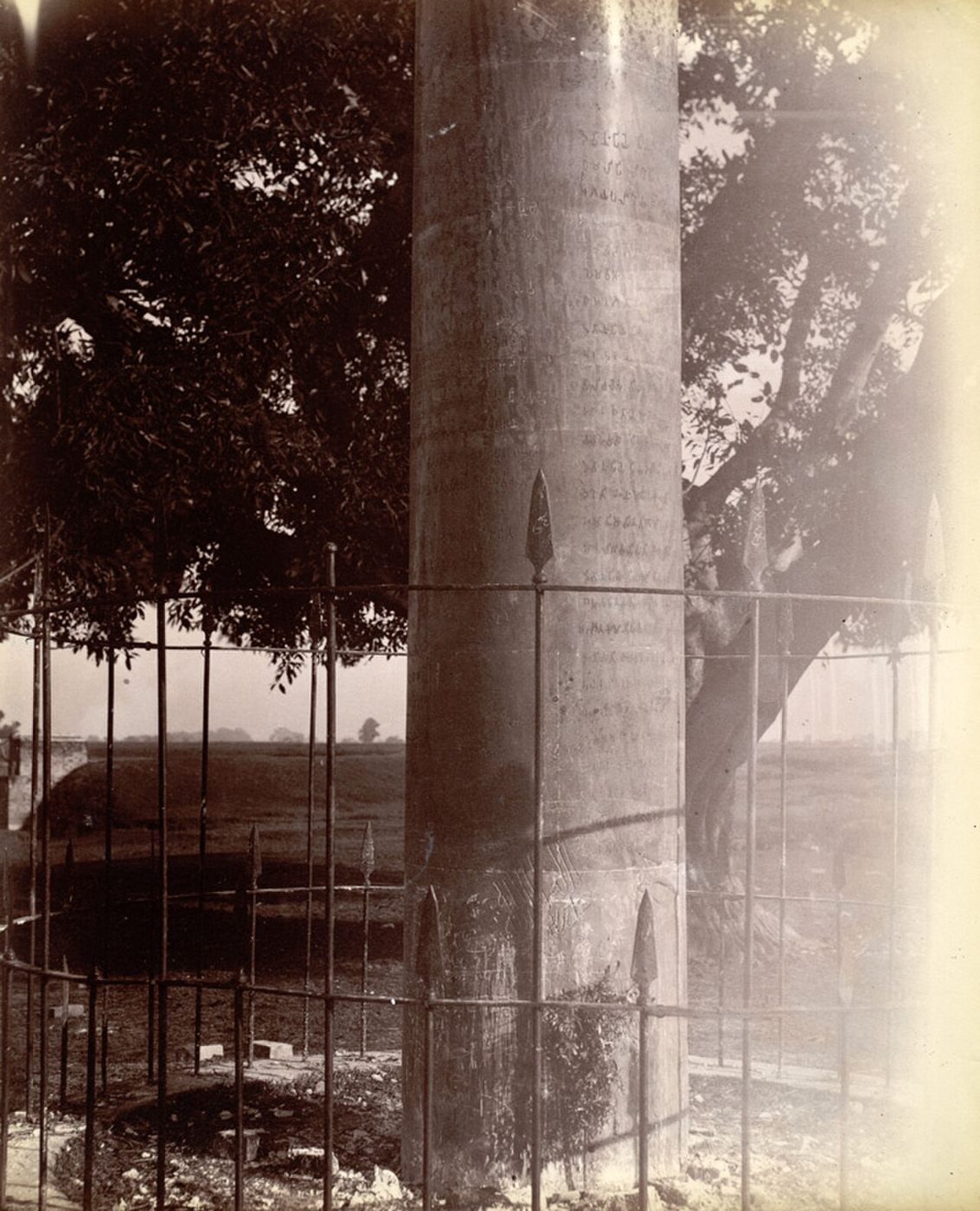
Image unavailable. The caption and source are still available.
The story
The Maurya dynasty under Ashoka ruled large areas of South Asia. He issued edicts on stone pillars and rock faces, emphasizing restraint in violence, kind treatment of his subjects, and respect for different religions, while also sponsoring Buddhist activities. The edicts provide direct material for understanding his ideas of government, but express the order the ruler wished to present rather than proving that policies were implemented everywhere. Later accounts of his building large numbers of stupas should also be distinguished from verifiable evidence.
Elsewhere in the world
South Asia in Ashoka's time maintained contact with the Hellenistic kingdoms, and political envoys and religious activities took part in wider networks of exchange.
Dates and precision
c. 268–232 BCE (reign) Approximate period
The dates describe a process over time; the interactive timeline uses its starting point.
Representative map location
Representative coordinates · 25.61°, 85.14°
Coordinates locate a representative point for the story. They do not mean the event happened only here and do not represent historical borders.
Bibliography
- Rice University OpenStax | Vedic India to the Fall of the Maurya Empire
Sources are listed as bibliography titles, without external links. A reference does not mean every sentence or interpretation has been independently verified.